↓
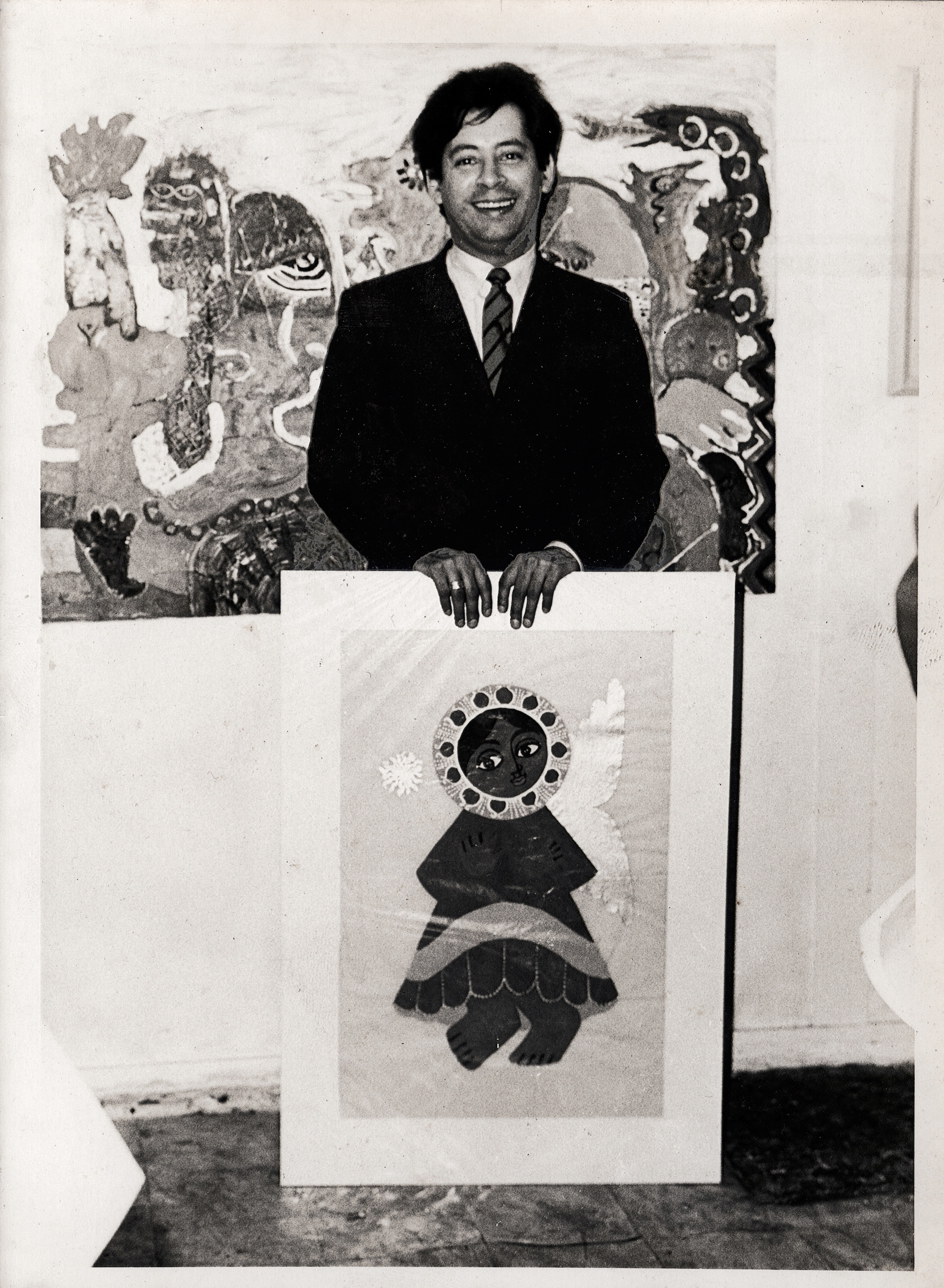
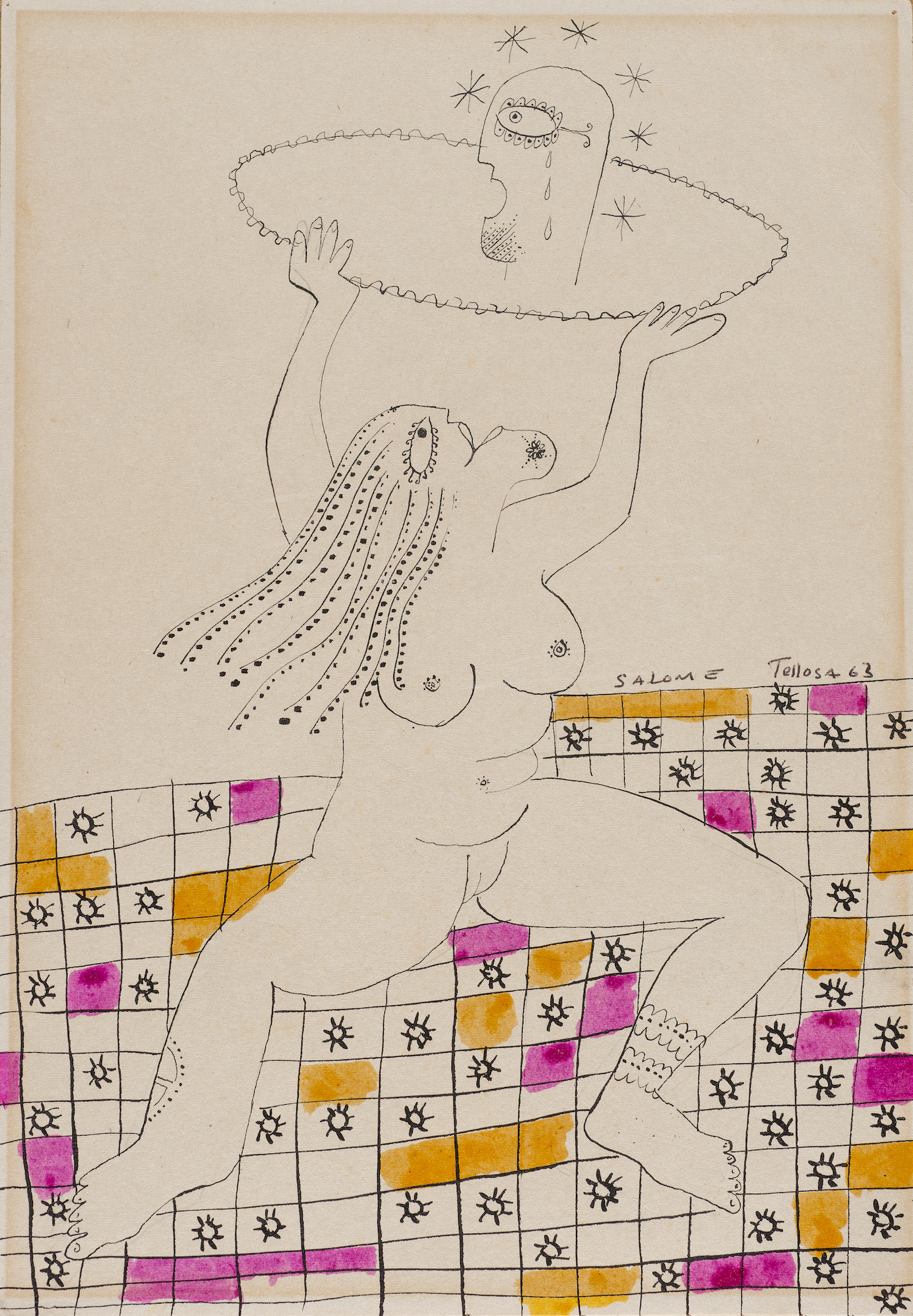
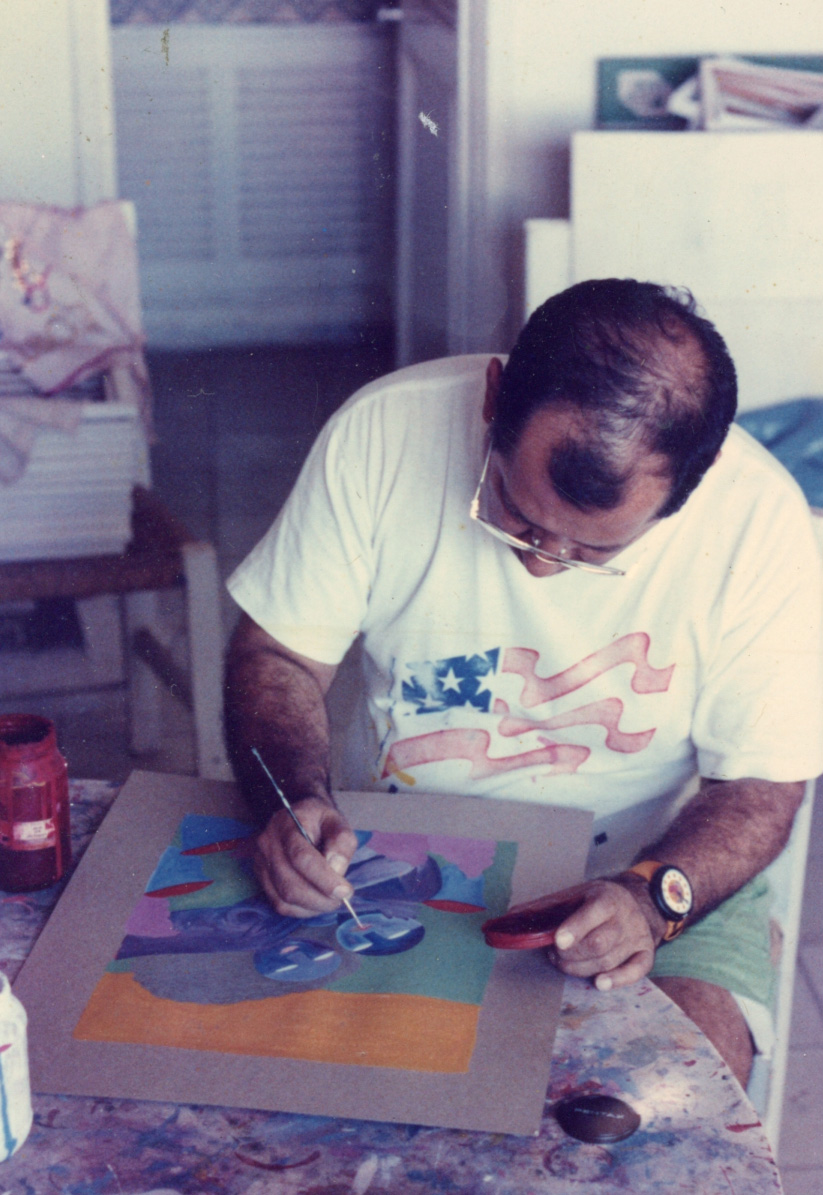
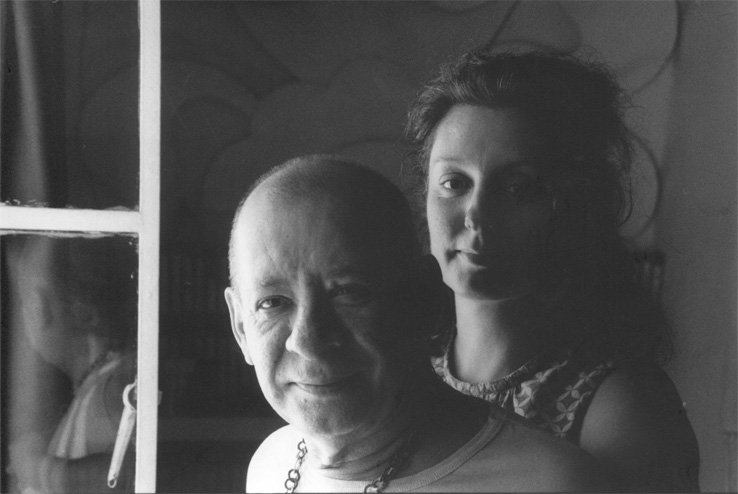
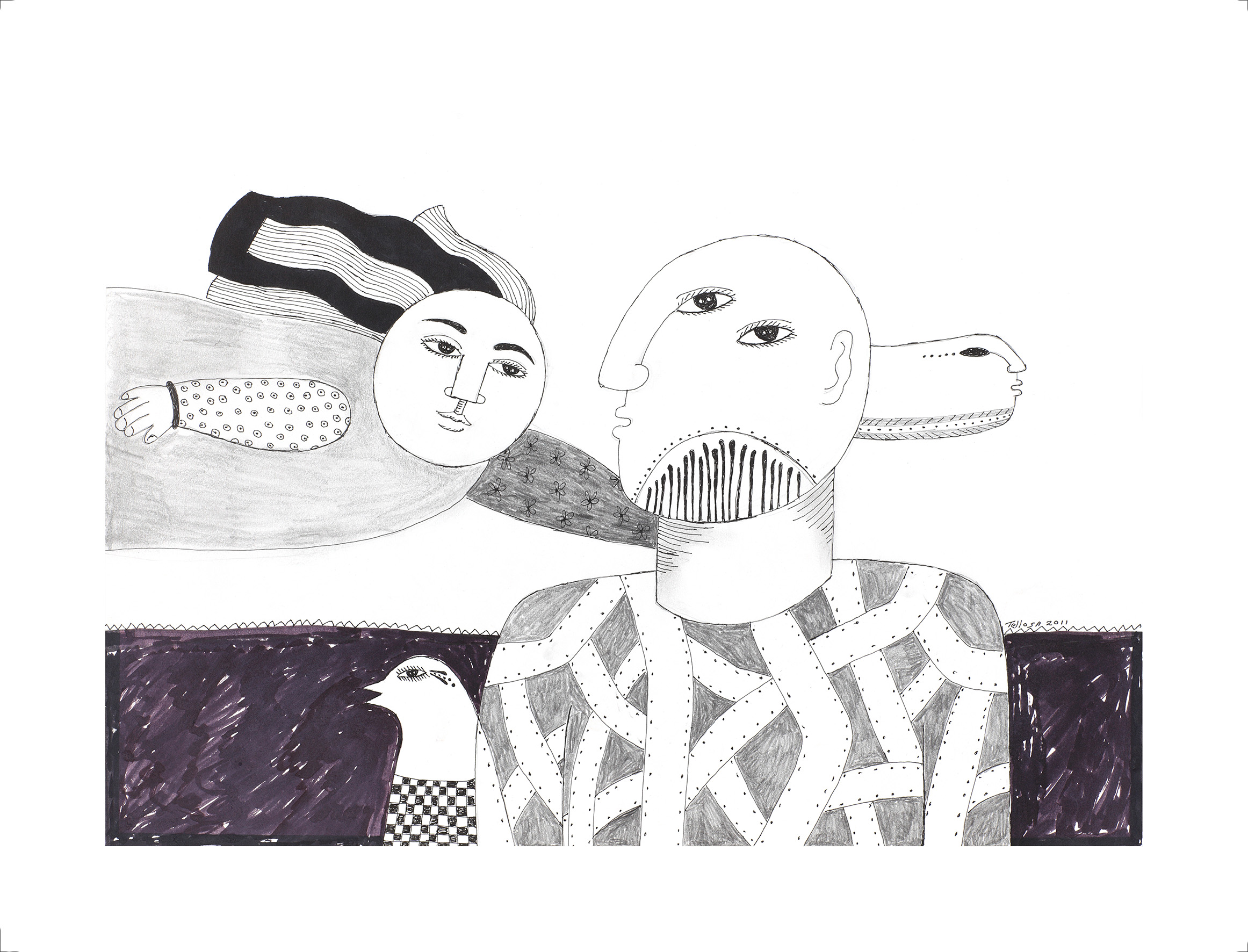
Jesús Tellosa (1936-2012), Mexican painter, sculptor and jewellery designer. Born Tacámbaro, Michoacán, his early years were spent in Sacramento, California and Guadalajara. In 1960 he met and married Mavis Harris, who was travelling through Mexico. She was English, and for the next twenty years he lived in London. In 1962 his daughter Catalina was born. In 1980 he returned to Mexico, settling in Puerto Vallarta, Jalisco, where he ran his own gallery, Galeria Bezan. He died after a short illness in 2012.
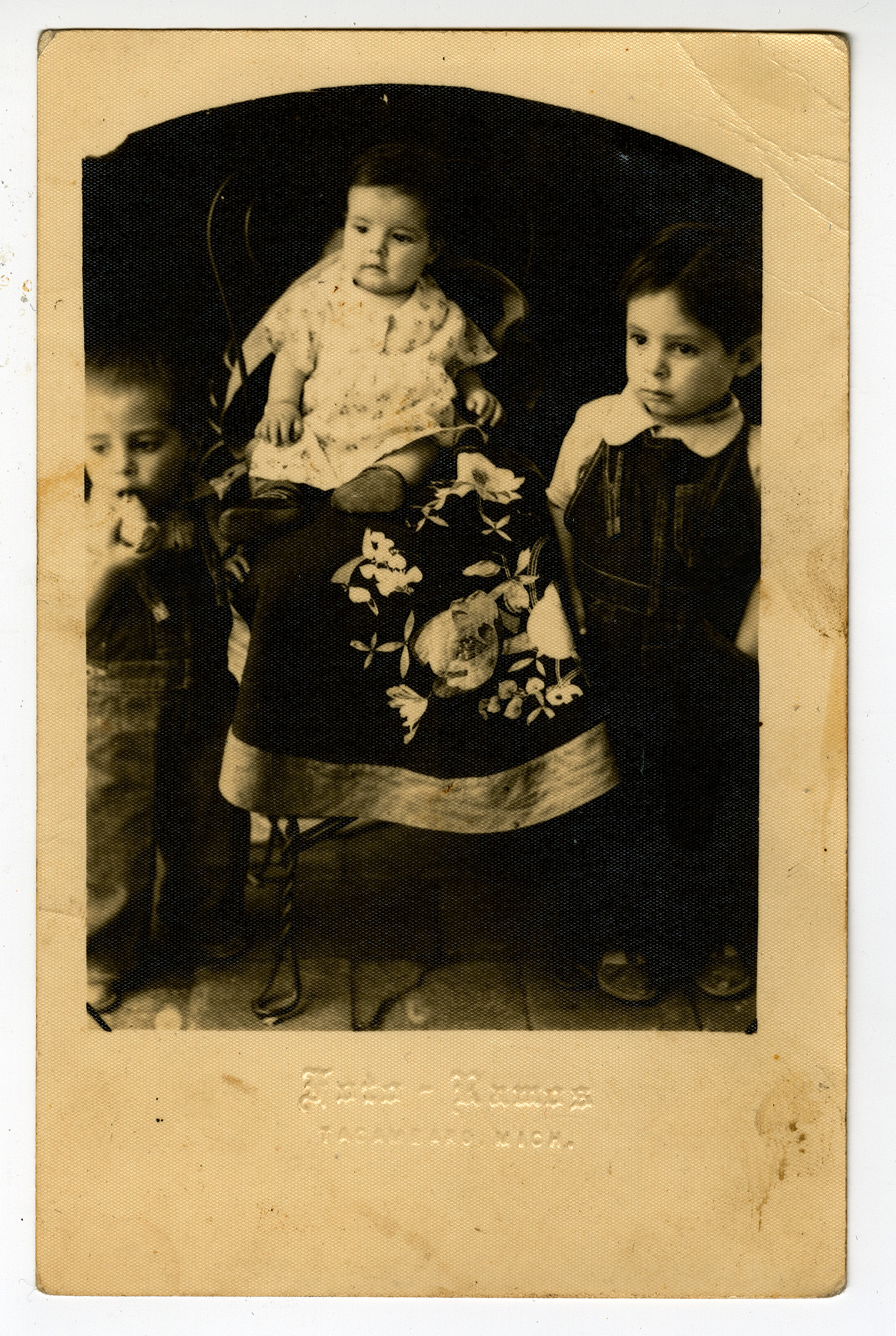
Jesús Botello Sánchez is born in Tacámbaro, Michoacán, Mexico on September 23, 1936. His parents, Beatriz Sánchez Fuentes and Salvador Botello González, are from Tacámbaro. He has an older brother, Víctor Manuel, born on October 19, 1931, and a younger sister who dies in infancy. His father abandons the family when they are children and his mother is forced to cross the border into the U.S. to look for work, spending five years in Sacramento, California, where Tellosa learns English. Eventually they return and settle in Guadalajara, Jalisco. During his adolescence (15–17) Tellosa studies at the Jesuit preparatory school, where he befriends Carlos Munguía, who will become a lifelong friend.
He studies at the Mexico–North American Cultural Institute in Guadalajara. During that time, a series of pencil and charcoal portraits show his natural ability for drawing. He also begins to experiment with different media and collage techniques, starting to find his own visual language. It is likely that around that time he creates his artistic name, taking the “tello” from Botello and the “Sa” from Sánchez, forming Tellosa.
He meets Mavis Harris at the Hotel Roma, Guadalajara, where he is working. Recently widowed, she is traveling through Mexico having previously been married to an English artist and wood engraver, Derrick Harris, who had died in January of that year. They find much in common and after several months, Tellosa proposes marriage to her. She hesitates to accept since she is eleven years older and he is Catholic. She suggests that spending some time apart would give them time to think things over. She returns to London in October, where she receives Catholic instruction and changes her name from Mavis to María.
Maria returns to Mexico at Christmas and they agree to marry.
Solo exhibitions at the Mexico–North American Cultural Institute and Galería Degollado, Guadalajara.
They marry in Guadalajara on January 2. María becomes pregnant during their honeymoon in Barra de Navidad, but Tellosa cannot return to London with her as he is called to National Service. María goes back to London in June, and Tellosa arrives on Christmas Eve after having managed to get out of his National Service.
Catalina is born on January 14. María finances an exhibition in her apartment which turns out to be very successful, most of the works are sold. Tellosa continues his studies at the Regent Polytechnic Institute, London. Alumni of the Polytechnic include Anthony Caro, Clifford Ellis, and Arnold Auerbach. During the following years he participates in several group exhibitions. Tellosa becomes a Latin American dance instructor at the Arthur Murray’s Dance School in order to contribute financially and pay for his art materials. The marriage meanwhile is however, collapsing. Tellosa is frequently absent.
Illustrates a songbook for BBC Television Broadcast to Schools, The Midnight Thief (music by Richard Rodney Bennett). María discovers that Tellosa is homosexual.
Tellosa leaves their home in August.
Group exhibition, Hamilton Gallery, London.
The divorce is finalized. At a reception at the Mexican Embassy in London, he meets Héctor Cárdenas, the cultural attaché, they become friends and Héctor introduces him to Feliciano Béjar, a Mexican artist also from the state of Michoacán who lives in London, their friendship becomes lifelong.
Group exhibition, Mercury Gallery, London.
To make ends meet, Tellosa works as a night switchboard operator at the Carlton Tower Hotel in Kensington.
Solo exhibition, Rimmell Gallery, London.
Group Exhibition, Hemel Hampstead Gallery, London.
Solo exhibition, Heal’s Gallery, London.
Tellosa meets Jean Marie Baille, a French student learning English in London, and for many years they frequently travel together, sharing a passion for the ancient worlds of the Middle East, North Africa, and the Mediterranean.
Latin American Painters: traveling exhibition organized by The British Council, including works by Mata, Tamayo, Béjar, Camargo, and Le Parc.
Exhibitions in Leeds, Nottingham, and Hull.
He returns to Mexico. His friend from Guadalajara, Carlos Munguía introduces him to the artist Manuel Lepe and his wife Laura in Puerto Vallarta . They quickly become firm friends and for the next three years Tellosa takes care of their gallery during the tourist season (November–May), returning to London in the summer months to buy antiques for the gallery and to see Catalina and María.
Tellosa opens a stall at the Portobello Road Antiques Market in London, which he maintains for ten years, trading in Islamic, Middle Eastern, Indian, and Roman antiquities.
Tellosa meets the actor and ceramics dealer Andre Van Gyseghem at Portobello Road. Andre invites him to live with him as his companion and he accepts.
Solo exhibition in Puerto Vallarta, Galería Lepe.
Solo exhibition in Mexico City and Acapulco, Galería Arvil.
Through his Italian actor friend Achille Brugnini he meets Marika Rivera, the daughter of Diego Rivera and the Russian Cubist painter Marevna.
Solo exhibition, Galerie Valentin, Zurich, Switzerland.
Group exhibition, Mexican Cultural Institute, San Antonio, Texas.
Solo exhibition in Mexico City, Galería Arvil.
Returns to Mexico for a few months.
Solo exhibition, Galería Lepe, Puerto Vallarta.
Solo exhibition, Galería Municipal, Guadalajara.
Loot-Goldsmiths Hall Contemporary Jewellery Design Exhibition, Director, Graham Hughes. This is the first event of its kind, exhibiting jewelers from independent studios who are emerging on the English scene and who are distancing themselves from traditional jewellery making techniques. Tellosa's fascination with antiquity is evident in this work.
Travels to Adelaide, Australia.
Loot-Goldsmiths Hall Contemporary Jewellery Design Exhibition, London and Leeds. Director, Graham Hughes.
Loot-Goldsmiths Hall Contemporary Jewellery Design Exhibition, London and Montreal, Canada. Director, Graham Hughes.
Solo exhibition, Turak Gallery, London.
Group exhibition, The Craft Centre, Melbourne, Australia.
Solo exhibition, Lane Gallery, Adelaide, Australia.
Group exhibition, The Craft Centre, Melbourne, Australia.
Group exhibition, Graphic Arts Centre, Adelaide, Australia.
Returns to London from Australia.
Andre Van Gyseghem dies. Tellosa decides to return to Mexico.
Group exhibition, Arnolfini Gallery, Bristol, England.
Settles in Puerto Vallarta, Jalisco. His old friend Carlos Munguía offers him the use of a small shop on Hidalgo Street that belonged to his grandfather. He moves in, creating a small gallery and a living space, where he begins to develop his work.
Carlos and his wife Elena have a restaurant, La Hacienda, on Aguacate Street, which has a spacious unused area at the rear of the restaurant, and they offer it to Tellosa. There he can create a larger space allowing him to make larger sculptures for the first time. The gallery is a great success, and he stays there for four years.
Solo exhibition, Galería Alebrije, Saltillo, Coahuila, Mexico.
Group exhibition, Giles and Botello Gallery, Adelaide, Australia.
Meets David and Shirley Levin, Americans from Indiana who have a home in Puerto Vallarta. They become very close, financing the production of Tellosa's first bronze collection as well as several jewellery collections.
With the continued support of the Levins, he is able to buy his first home at 756 Guadalupe Sanchez, in central Vallarta. It is large enough to include a spacious gallery, a studio, and living area. The financial stability that the house provides allows his work to thrive.
Group exhibition, Hollywood Collects, California State Polytechnic, Pomona.
Solo exhibition, Fitzpatrick/de Gooyer Gallery, Puerto Vallarta. The gallery is directed by Raquel Brooks and Kirk de Gooyer, and it becomes the most successful gallery relationship of his career.
Solo exhibition, Marcella Halpert Gallery, New York.
His mother dies in Colima. Despite his father's mistreatment and abandonment of the family over the years, Tellosa decides to bring him to Vallarta, renting a small apartment for him nearby, where he can easily take care of him.
Solo exhibition, Fitzpatrick/de Gooyer Gallery, Puerto Vallarta.
Visits London for the first time in more than ten years.
Solo exhibition, Fitzpatrick/de Gooyer Gallery, Puerto Vallarta.
Solo exhibition, Galería Pacifico, Puerto Vallarta.
His daughter Catalina moves to Mexico City.
Solo exhibition, Cafe des Artistes, Puerto Vallarta.
He is diagnosed with type 2 diabetes. His father dies in Puerto Vallarta.
His brother Manuel, from whom he has been estranged, dies of throat cancer.
Solo exhibition, Rosas Blancas, Puerto Vallarta.
He suffers a heart attack.
He undergoes quadruple bypass heart surgery in Maastricht, Holland. Catalina is with him and takes him to London for his recuperation, returning with him to Puerto Vallarta in January 2003. He makes a full recovery.
He sells his house in Vallarta and moves to Xalapa, Veracruz.
Honored by the city of Puerto Vallarta for his contribution to the visual arts.
He develops problems with his left foot due to diabetes and has to undergo surgery which results in a part amputation of his foot.
After three years in Xalapa, he returns to Puerto Vallarta staying for the first few months in a friends' apartment in the Marina. Eventually he moves to a suburb of Vallarta. His Diabetes is afecting his day-to-day life.
No longer living in downtown Puerto Vallarta causes feelings of isolation and depression, and he struggles to make work. His walking and overall mobility becomes very laboured and the cause is not clear.
His health continues to decline and after undergoing various tests is diagnosed with early Parkinson’s. His diabetes is taking its toll, and he now requires round-the-clock care. Now living with an American friend in Bucerías, Catalina flies in to be with him, but has to return to London after a few weeks.
Solo exhibition, Corsica Gallery, Puerto Vallarta.
Catalina returns to Mexico in January, finds him an apartment in Palo Seco, a suburb of Vallarta, and his old friend from London, Ron Mullenger, flies in to take care of him while Catalina has to return to London. Toward the end of the month Catalina returns to Mexico, but Tellosa is taken to hospital shortly before she arrives. He dies two weeks later, on February 24, Catalina is with him.
Group exhibition, From Picasso to Koons: The Artist as Jeweller. Bass Museum, Miami, Florida.